Migration Centre of Australia

admin

AAT revokes “dangerous” man’s visa cancellation

Yet again, the Administrative Appeals Tribunal has saved a “dangerous” apex gang member who was supposed to be kicked out from Australia. The AAT overturned a decision on Friday. The Department had cancelled his visa after evidence from the police that the man, aged 20, was on a seven-year crime spree of a “violent and anti-social nature”. The accused had been staying in a detention, awaiting deportation to New Zealand, since his visa was cancelled by the Department in February. The AAT revoked the visa cancellation saying they did not want to separate him from his Melbourne-based family and are observing his mental condition. They were told that he has been treated for mental illness since 2013 and was diagnosed as bipolar in 2014.

Read more

Victoria TAFE unhappy with State government

The Australian Education Union that has been tussling with the government over a new agreement for almost a year has withdrawn from negotiations saying the State government was proposing unfair changes. What the Union has been most vocal about is its claim that the government wants to increase the workload of TAFE teachers by up to 20 per cent — from an average of 741 hours to 900. Among other concerns are the government’s proposed deal of cutting penalty rates, increasing attendance requirements from 42 weeks to 46 weeks a year and the pay gap between Victorian and NSW TAFE teachers, which it says is an average of $10,000. The state government, on the other hand, claims to have saved TAFE by voicing against the former government’s slashing of funding to TAFE.
Read more

Calls for international travellers to declare excess cash

International travellers into and out of Australia are being reminded of the need to declare any cash they are carrying in excess of AUD $10,000 or more, to help make travel at airports smoother. A joint media release from the Australian Border Force (ABF), Australian Federal Police (AFP) and AUSTRAC was issued on Monday reminding travellers that AFP and ABF were continuing to observe international travellers with undeclared currency, particularly at Sydney International Airport. It says that under Australian law, travellers can carry an unlimited amount of cash into and out of Australia – however, amounts of $10,000 or more Australian dollars (or foreign currency equivalent) must be declared first by completing an online form.
Read more

Greens call on government to take in 20,000 Rohingya refugees

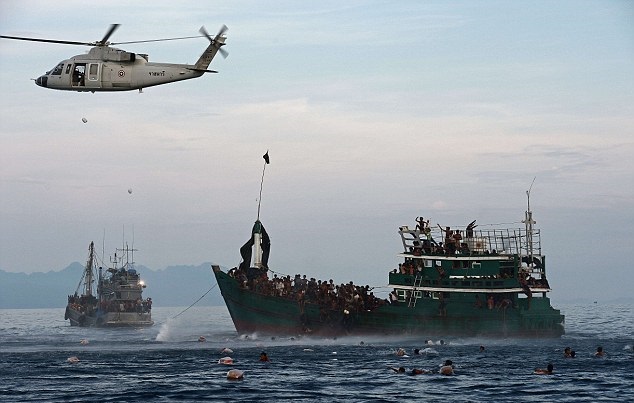
As the situation for Rohingya Muslims worsens in Myanmar, Greens have called on the government to take in 20,000 refugees fleeing bloodshed. The political party has suggested Australia organises an emergency intake similar to the Syria program launched two years ago. According to United Nations, at least 300,000 people have fled Myanmar to Bangladesh in recent weeks.As the situation for Rohingya Muslims worsens in Myanmar, Greens have called on the government to take in 20,000 refugees fleeing bloodshed. The political party has suggested Australia organises an emergency intake similar to the Syria program launched two years ago. According to United Nations, at least 300,000 people have fled Myanmar to Bangladesh in recent weeks.
Read more

Applying for a skills assessment with Engineers Australia?

If you are applying for skills assessment with Engineers Australia (EA), there are a few recent announcements you may find useful. Last week, EA announced that they will now accept PTE (Academic) test results, with effect from 1 November 2017. The minimum score for an applicant to be considered is 50 in each of the 4 modules. In June 2017, Pakistan became a full signatory of the Washington Accord. Thus applicants holding a qualification accredited/acknowledged by the Pakistan Engineering Council (PEC) under the Washington Accord list completed on or after 2017 can now apply via the accredited qualifications pathways. EA now wants applicants, who have been practising in a country where Engineering is a regulated profession, to include evidence of registration in the application.
Read more

Some uniformity please!

Some uniformity please! Immigration minister Peter Dutton prides himself on being tough when it comes to immigration laws and how he exercises his discretion in intervening in cases that are rejected by the DIBP. All this very much behoves a person holding the position of immigration minister in a country which attracts millions of visa applicants each year. But there’s something amiss which is also very important: Uniformity. Last month, UK-born Kelly Webb was allowed to stay in the country despite having several domestic violence and violent crimes cases registered against her. She was being deported but has now been allowed to stay, and cannot apply for citizenship for next 3 years. A mild rap on the knuckles if you consider the case of a 92-year-old British war veteran who was asked to leave the country and harassed for weeks—with his Medicare card blocked—but was eventually allowed to stay. Bear in mind he had no criminal case against him. Or the case of a Brisbane grandmother who was deported after having spent 50 years in Australia. Minister Dutton has repeatedly said that there would be zero tolerance against “foreigners” found violating the law. No sane person will argue against that. But why can’t there be a policy—approved by the judiciary, of course—for such cases so that it lays down the guiding principles once and for all? I don’t think it is such a big ask. It will also help his own workload too, considering he will have a set template to follow.
Read more

India in the spot for March migration figures

India in the spot for March migration figures The latest migration figures from the Australian Bureau of Statistics (ABS) show that India was the biggest source of Australian migration in March, with a total of 2,250 new migrants arriving in the country. China, with 1,720 migrants, was the second highest. Iraq, New Zealand and the Philippines rounded out the top 5, while United Kingdom, South Africa, Vietnam, Malaysia and Sri Lanka followed to complete the top 10 list. 11,590 people migrated to Australia in March. This is down slightly from February’s 11,830 but higher than January’s 9,610. The total migration for March 2016 was only slightly higher than this year, at 12,070. The March statistics are the most recent release of figures since the government revealed major changes to the 457 work visa program on 18 April. Its replacement, the temporary skills shortage visa (TSS), will have two streams for short and medium-term employment and stricter eligibility requirements. Read original report here and ABS report here.
Read more

I have my bet on VET!

I have my bet on VET! The underrating of vocational education in and across the country is no new news. The new and in fact bigger and startling news is that vocational education and training (VET) may promise graduates a more auspicious and successful career than a university degree, or at least equivalent. Don’t only take my word for it. A latest report from McCrindle, which was commissioned by the Skilling Australia Foundation, advocates this claim, confirming that vocational education and training may take you places than its rich cousin: a multi-thousand dollar university degree. The report may disappoint a lot of people’s perceptions about vocational education, who take vocational education and training for an impracticable education with little to no promises of a bright future. And I say a “lot of people”, because according to the report, four in five parents would prefer their children go to university after school over pursuing vocational education. Now, nowhere I am asserting that a university degree has any less significance or value; but attaining vocational education, sandwiched between a high school certificate and a university degree can do wonders for the student, who later may or may not choose to pursue a university degree at all. Ok! Let’s put it this way: a vocational education may unlock a student’s potential three-folds and open new pathways and arenas for higher education. Although, according to the figures in the report, nearly half of Australians think VET is no longer as relevant as university, government figures indicate a different story, according to which nine of the top 10 occupations predicted to have the most jobs growth are in vocational training areas. Now that is a significantly substantial number. One that ought to be given huge attention. I found three findings of the report extremely encouraging. First that the median full-time income for a VET graduate is $56,000 compared with a $54,000 for an undergraduate; secondly that nearly eight in 10 VET graduates have a job soon after training, while only seven in 10 university graduates secure a job that soon after completing their degree. Lastly that more than nine in 10 trade apprentices have jobs after finishing training. These are amazing numbers and those that must not be neglected by the students themselves to gain hands-on skills in short time but one that requires immense dedication, by their parents and guardians to have confidence in them and VET and the government and other authorities to ensure proper and sufficient funding for students to gain hands-on skills. Australian VET in India The need for such skills acquisition becomes even more crucial in countries where the population growth is increasing several times faster than the rate of its expansion of education and literacy; and that is one of the objectives behind McKkr’s launching the Australian VET in India. After a careful research of the needs of the Indian and Australian education industries, McKkr’s TAFE Training developed a programme to offer six nationally recognised qualifications in partnership with Hunter TAFE. This has been a result of my prediction of the growing need for VET and its significance in Australia, India and the rest of the world and thus I took the Australian VET to India with a vision to make an effective and recognisable contribution in vocational education and training. It is time that we stop treating VET as a less respectable choice than a university degree and stop treating it as the latter’s poor cousin. McCrindle’s latest report on the significance of VET now corroborates what I have been reiterating for quite some time and is just a “cherry on top”.
Read more

IELTS Writing Mark Schemes

IELTS Writing Mark Schemes Writing is tricky. Always. Not only in academic exams but also professional. The IELTS Writing section is one of such tricky exams to pass and since there are no exact answers to the questions, the score is extremely relative to the write-up produced. Tips always help so here is a table that will give you an idea about how writing sections are marked. This may help you score a point or two higher. Read carefully, because reading carefully is no less than a trick either. Band Task Achievement Coherence and Cohesion Lexical Resource Grammatical Range & Accuracy 9 fully satisfies all the requirements of the task clearly presents a fully developed response uses cohesion in such a way that it attracts no attention skilfully manages paragraphing uses a wide range of vocabulary with very natural and sophisticated control of lexical features; rare minor errors occur only as ‘slips’ uses a wide range of structures with full flexibility and accuracy; rare minor errors occur only as ‘slips’ 8 covers all requirements of the task sufficiently presents, highlights and illustrates key features / bullet points clearly and appropriately sequences information and ideas logically manages all aspects of cohesion well uses paragraphing sufficiently and appropriately uses a wide range of vocabulary fluently and flexibly to convey precise meanings skilfully uses uncommon lexical items but there may be occasional inaccuracies in word choice and collocation produces rare errors in spelling and/or word formation uses a wide range of structures the majority of sentences are error-free makes only very occasional errors or inappropriacies 7 covers the requirements of the task (Academic) presents a clear overview of main trends, differences or stages (General Training) presents a clear purpose, with the tone consistent and appropriate clearly presents and highlights key features / bullet points but could be more fully extended logically organises information and ideas; there is clear progression throughout uses a range of cohesive devices appropriately although there may be some under-/over-use uses a sufficient range of vocabulary to allow some flexibility and precision uses less common lexical items with some awareness of style and collocation may produce occasional errors in word choice, spelling and/or word formation uses a variety of complex structures produces frequent error-free sentences has good control of grammar and punctuation but may make a few errors 6 addresses the requirements of the task (Academic) presents an overview with information appropriately selected (General Training) presents a purpose that is generally clear; there may be inconsistencies in tone presents and adequately highlights key features / bullet points but details may be irrelevant, inappropriate or inaccurate arranges information and ideas coherently and there is a clear overall progression uses cohesive devices effectively, but cohesion within and/or between sentences may be faulty or mechanical may not always use referencing clearly or appropriately uses an adequate range of vocabulary for the task attempts to use less common vocabulary but with some inaccuracy makes some errors in spelling and/or word formation, but they do not impede communication uses a mix of simple and complex sentence forms makes some errors in grammar and punctuation but they rarely reduce communication 5 generally addresses the task; the format may be inappropriate in places (Academic) recounts detail mechanically with no clear overview; there may be no data to support the description (General Training) may present a purpose for the letter that is unclear at times; the tone may be variable and sometimes inappropriate presents, but inadequately covers, key features / bullet points; there may be a tendency to focus on details presents information with some organisation but there may be a lack of overall progression makes inadequate, inaccurate or over-use of cohesive devices may be repetitive because of lack of referencing and substitution uses a limited range of vocabulary, but this is minimally adequate for the task may make noticeable errors in spelling and/or word formation that may cause some difficulty for the reader uses only a limited range of structures attempts complex sentences but these tend to be less accurate than simple sentences may make frequent grammatical errors and punctuation may be faulty; errors can cause some difficulty for the reader 4 attempts to address the task but does not cover all key features / bullet points; the format may be inappropriate (General Training) fails to clearly explain the purpose of the letter; the tone may be inappropriate may confuse key features / bullet points with detail; parts may be unclear, irrelevant, repetitive or inaccurate presents information and ideas but these are not arranged coherently and there is no clear progression in the response uses some basic cohesive devices but these may be inaccurate or repetitive uses only basic vocabulary which may be used repetitively or which may be inappropriate for the task has limited control of word formation and/or spelling; errors may cause strain for the reader uses only a very limited range of structures with only rare use of subordinate clauses some structures are accurate but errors predominate, and punctuation is often faulty 3 fails to address the task, which may have been completely misunderstood presents limited ideas which may be largely irrelevant/repetitive does not organise ideas logically may use a very limited range of cohesive devices, and those used may not indicate a logical relationship between ideas uses only a very limited range of words and expressions with very limited control of word formation and/or spelling errors may severely distort the message attempts sentence forms but errors in grammar and punctuation predominate and distort the meaning 2 answer is barely related to the task has very little control of organisational features uses an extremely limited range of vocabulary; essentially no control of word formation and/or spelling cannot use sentence forms except in memorised phrases 1 answer is completely unrelated to the task fails to communicate any message can only use a few isolated words cannot use sentence forms at all Source: http://www.examenglish.com/IELTS/IELTS_Writing_MarkSchemes.html
Read more

International education providers to be the focus of regulatory scrutiny

International education providers to be the focus of regulatory scrutiny Providers of international education have been put on notice that they will be the target of greater scrutiny under an updated regulatory strategy from the Australian Skills Quality Authority (ASQA). ASQA Chief Commissioner Mark Paterson said the agency has seen strong growth in the number of training providers seeking registration on the Commonwealth Register of Institutions and Courses for Overseas Students (CRICOS). It will now undertake a strategic review of the delivery of VET and English language courses to overseas students, aimed at identifying what it describes as “good provider practice and potential areas of risk to overseas students and Australia’s reputation…”. It will also review training providers offering assessment-only services to offshore students in a number of target countries including China, India and the UK. A second broad area of ASQA’s crackdown will focus on trainers and assessors, including the delivery of the Certificate IV Training and Assessment (TAE). “This continued scrutiny will apply to both RTOs currently delivering training products from the TAE Training Package and to any RTOs seeking to deliver these training products for the first time,” ASQA says.
Read more

Migration Centre of Australia (MCA) Your trusted partner for Australian immigration. We simplify visas, skilled migration, sponsorships, and more—so you can focus on your future.

Contact Info

+61 2 4626 1002
info@migrationcentreofaustralia.com.au
Suite 6, Level 12, 101 Bathurst Street, Sydney NSW 2000
By Appointment Only

Brisbane  Office:

200 Mary St, Brisbane City QLD 4000, Australia

Melbourne Office:

Ground Level, 161 Collins Street, Melbourne VIC 3000

Follow Us